01
Vibration
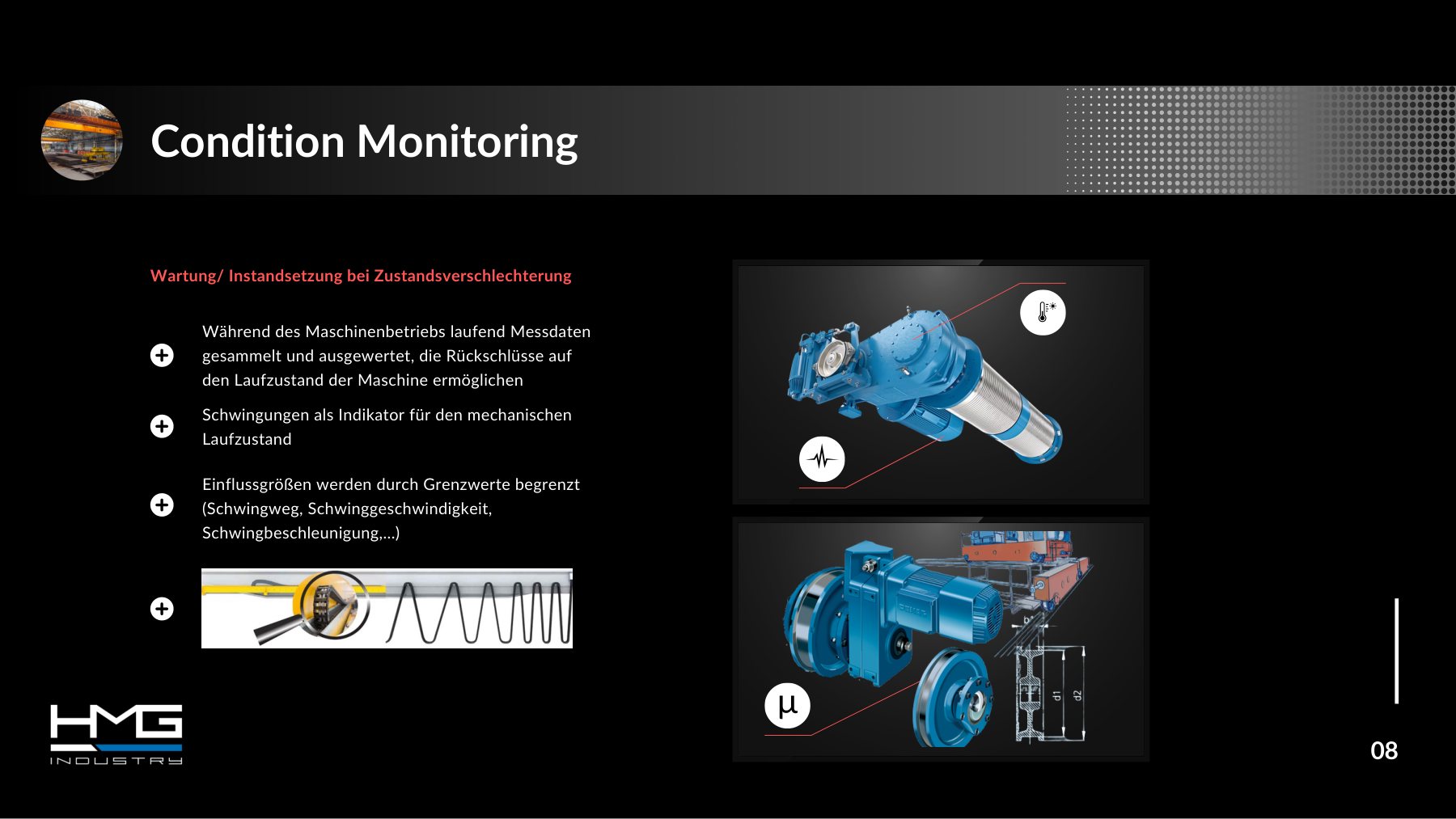
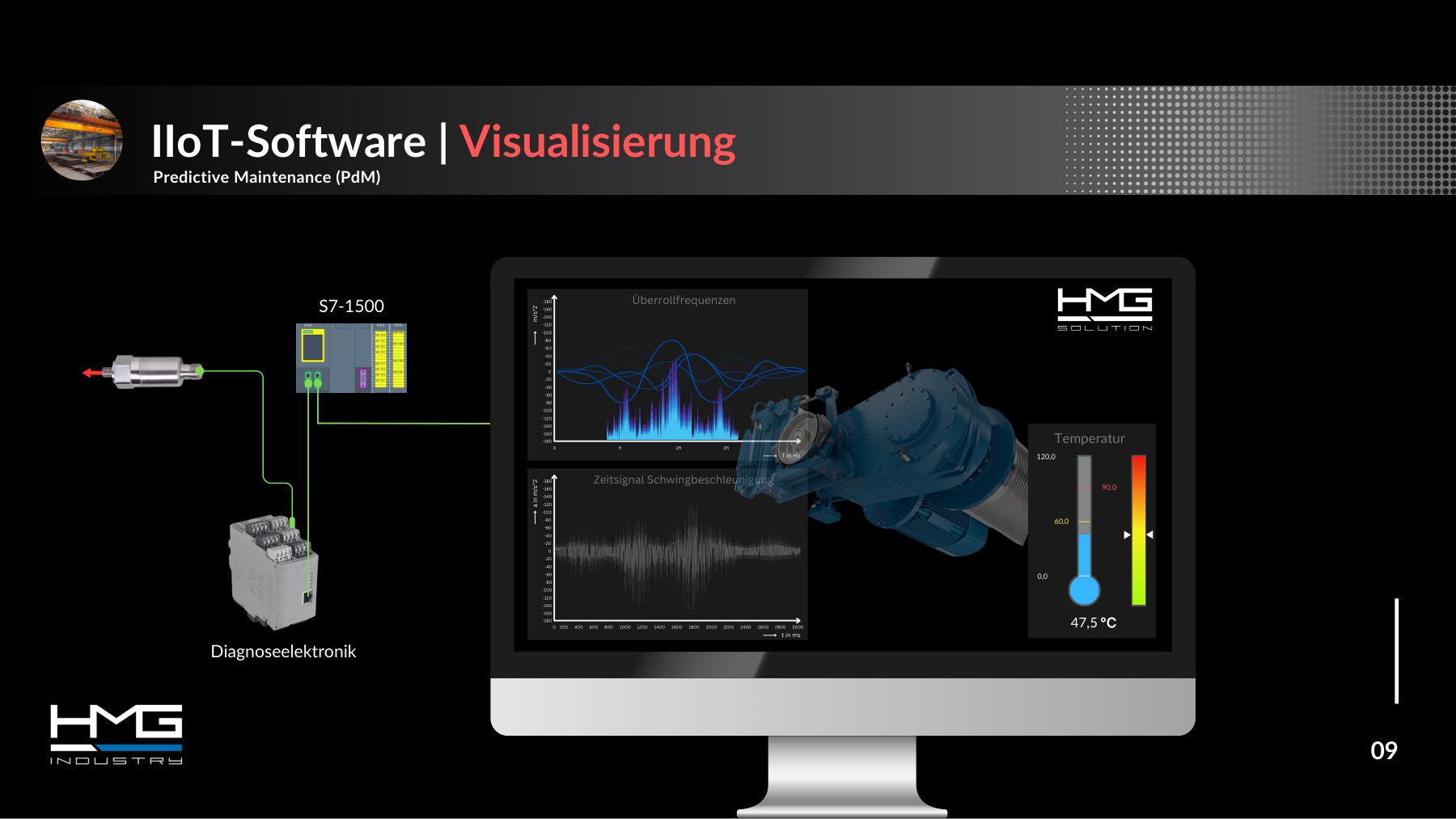
Frequency and time-signal analysis to detect imbalance, misalignment and bearing damage.

We continuously capture vibration, temperature and lubricant condition and analyse them with AI support. You detect damage before it causes downtime — and schedule maintenance by need, not by calendar.
Condition monitoring provides the data basis for every modern maintenance strategy — from time-based (TBM) and condition-based (CBM) to predictive (PdM).

Frequency and time-signal analysis to detect imbalance, misalignment and bearing damage.
Continuous trend monitoring of critical components for early anomaly detection.
Oil ageing, viscosity and moisture content as indicators of wear.
Rolling frequencies reveal incipient bearing damage long before failure.
Automatic alerts when machine-specific thresholds are exceeded.
Choosing the right maintenance strategy: RTF, TBM, CBM, PM or PdM.
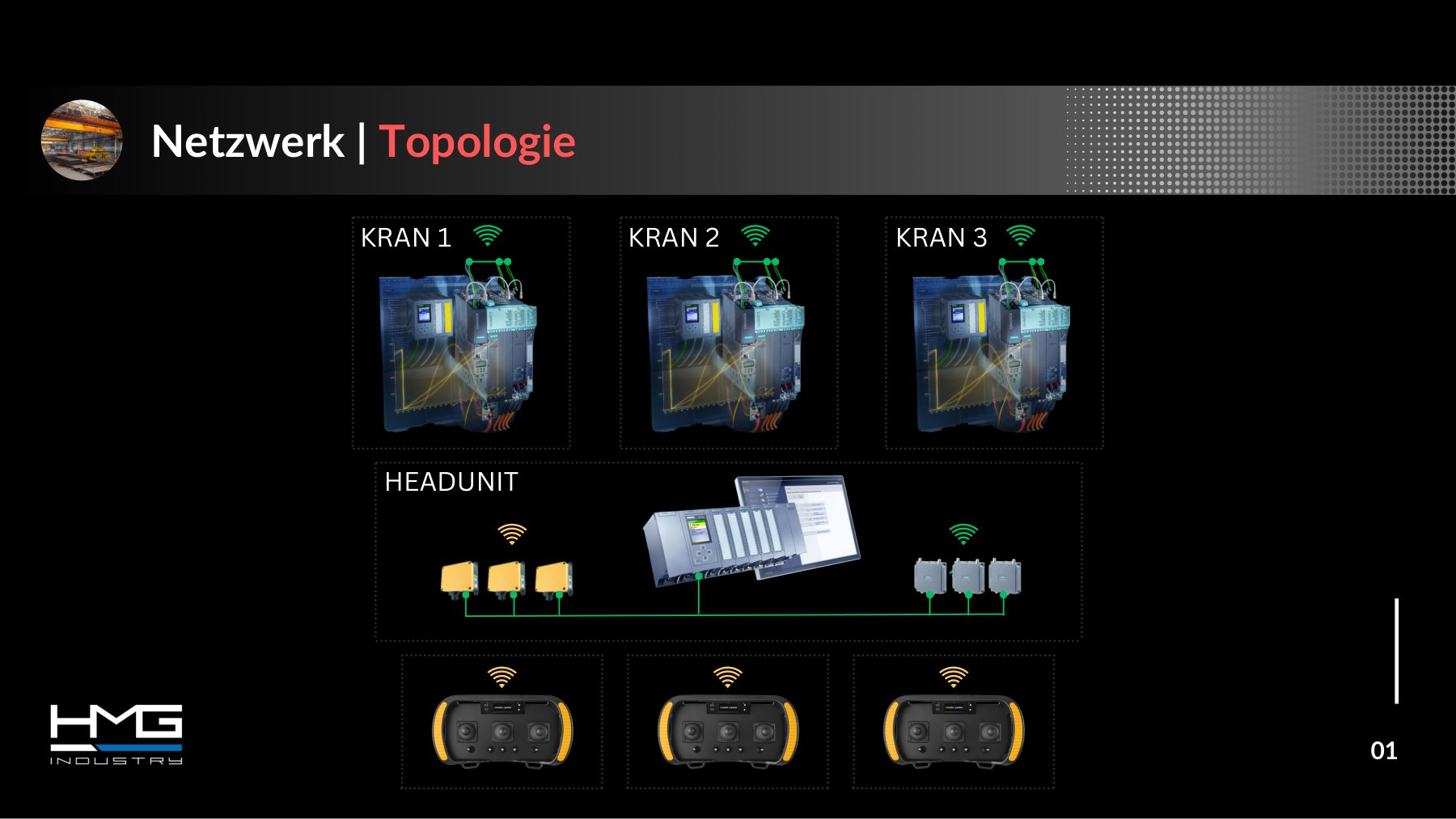
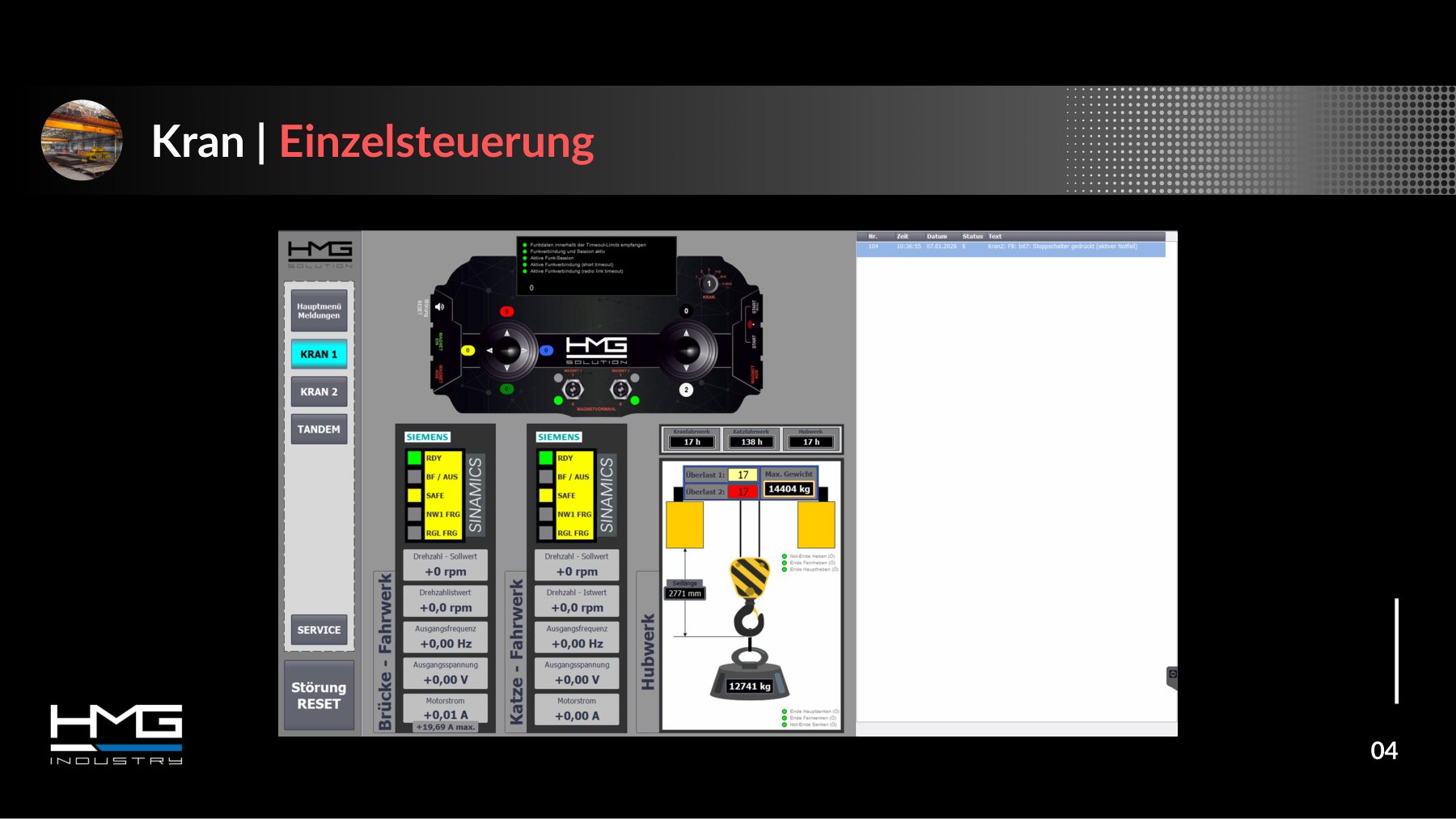
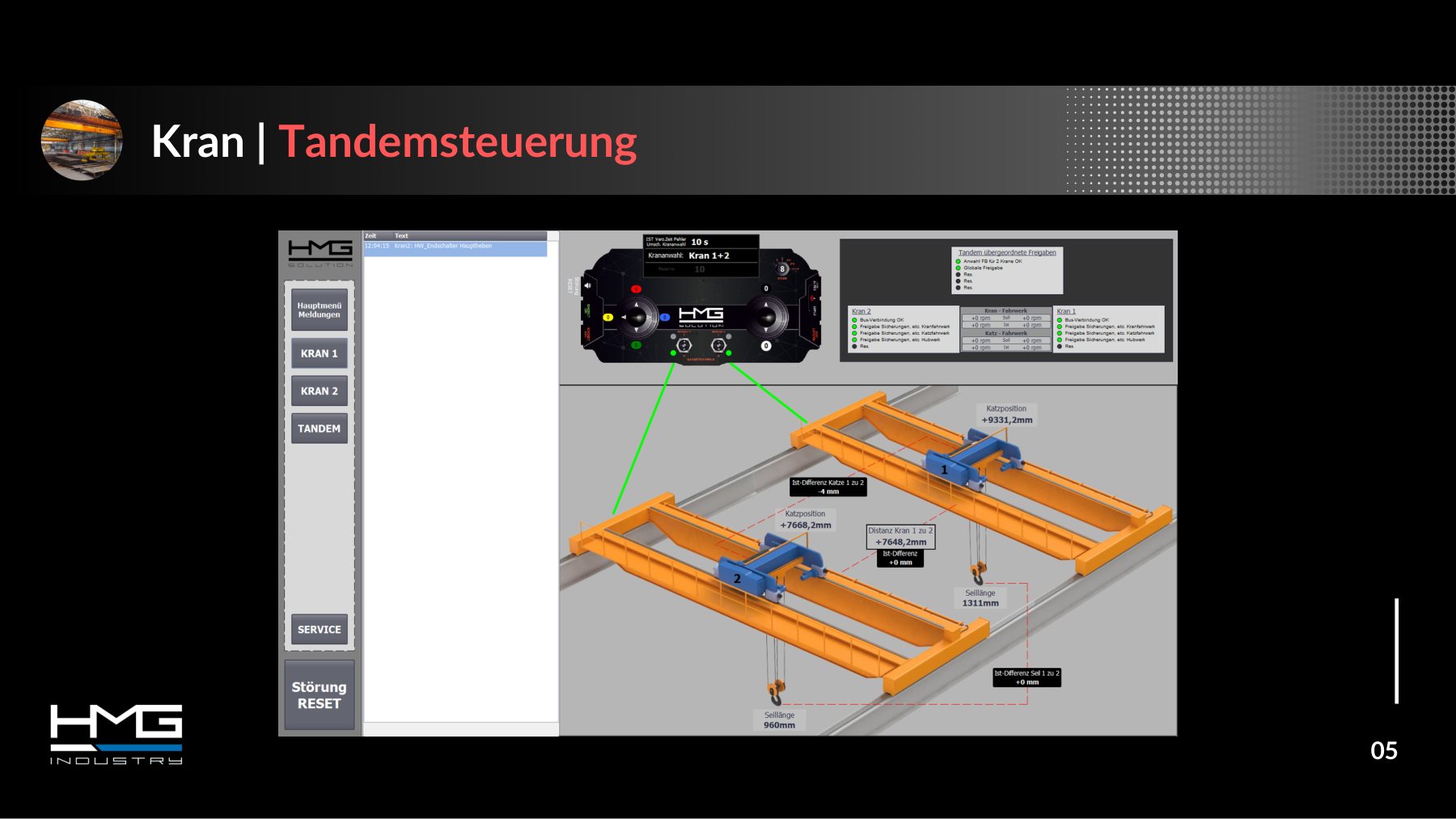
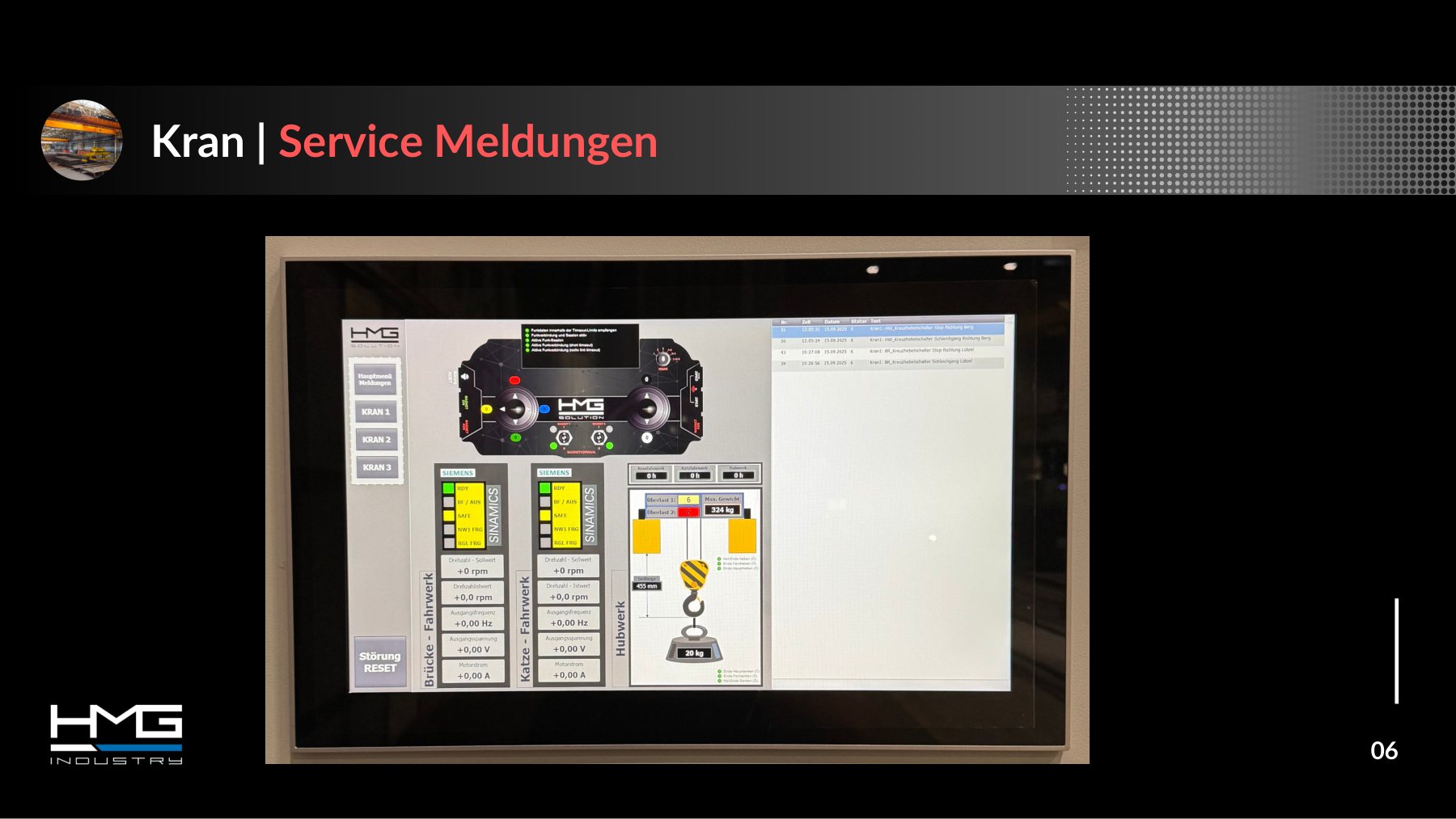
Supervisory control for multi-crane operation: tandem travel with anti-sway, radio remote control with overload protection, service messages and condition monitoring.
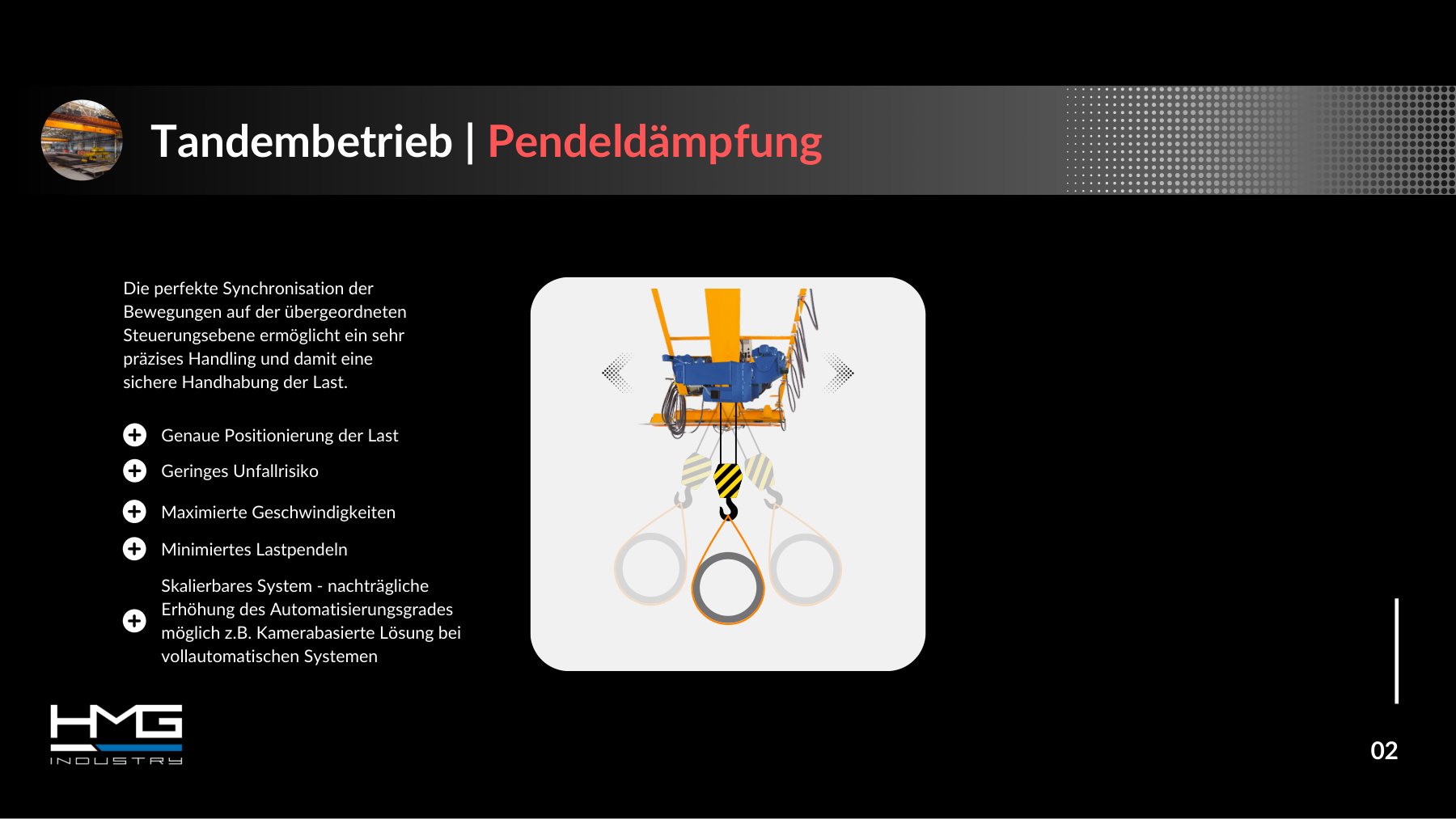
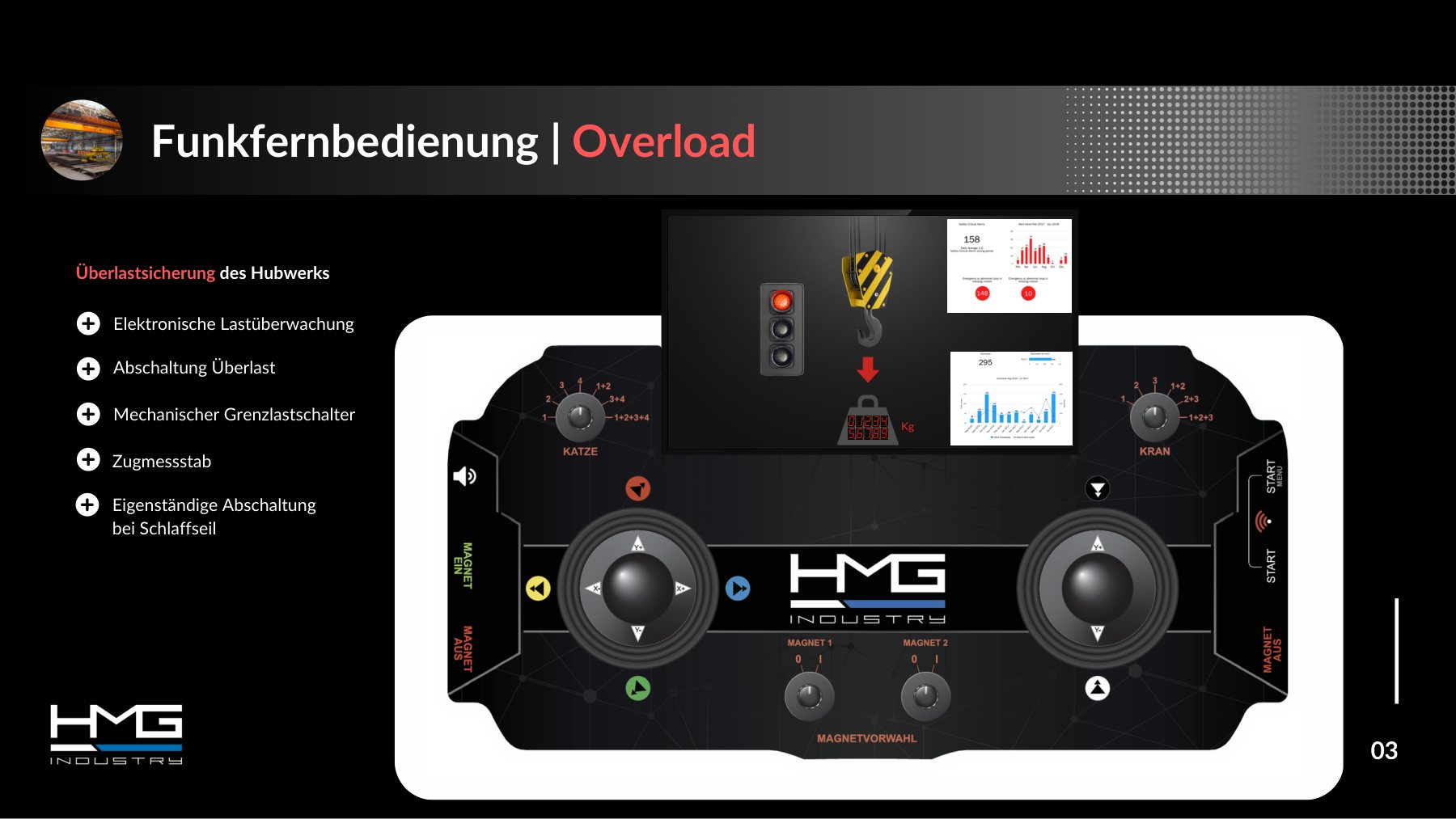
TCS keeps heavy loads steady and several cranes in step. A head unit synchronises hoists, bridge and trolley travel over a dedicated radio network; the visualisation shows trolley positions, distances and rope lengths together with the actual difference. Anti-sway takes the swing out of the load: precise positioning, lower accident risk, higher speeds. The radio remote control adds electronic load monitoring, a limit-load switch, a tension measuring rod and independent shutdown on overload or slack rope; service messages, operating hours and vibration data run into the same interface. The system is scalable — the degree of automation can be raised later, up to camera-based fully automatic solutions.
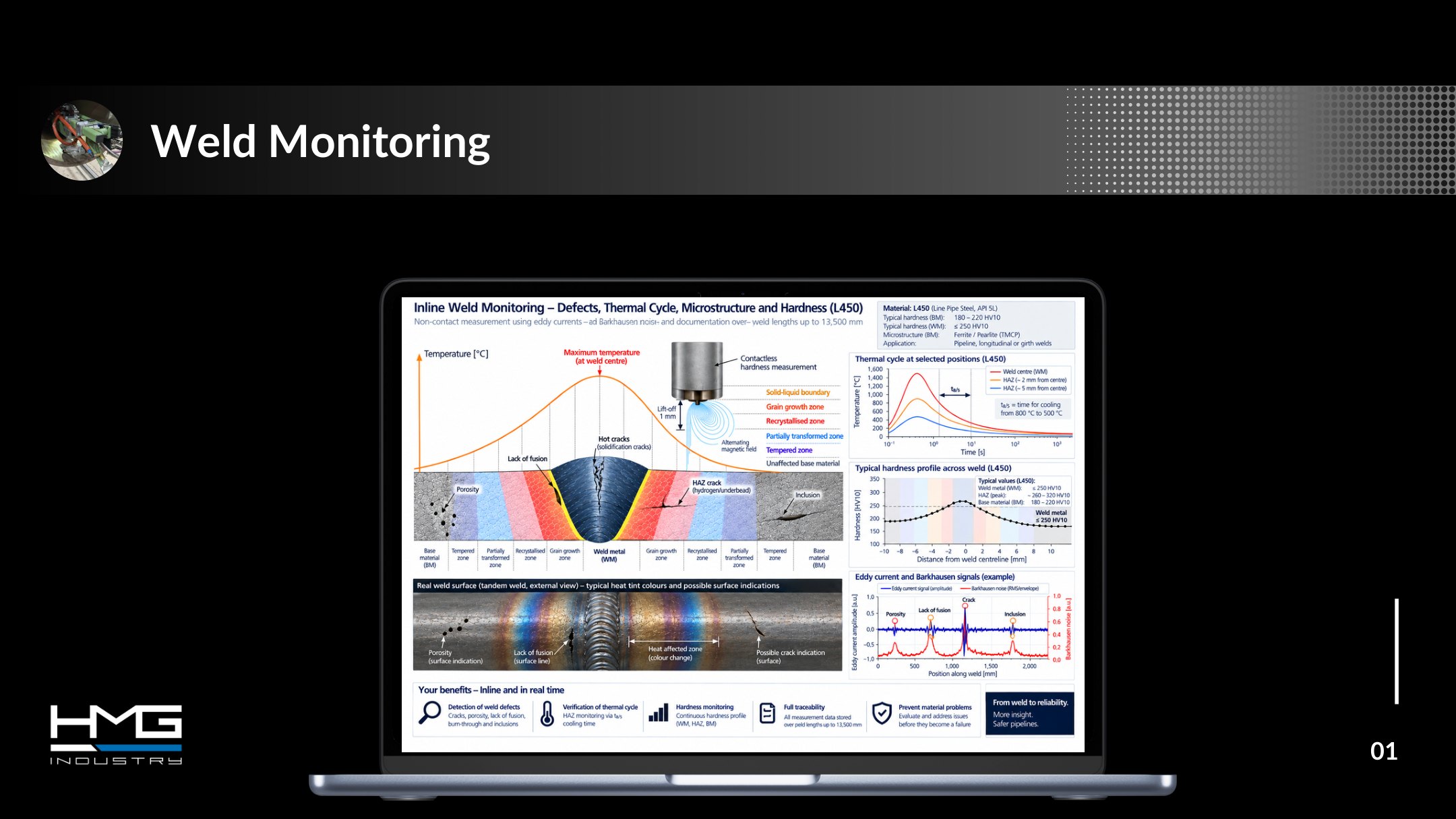
Real-time inline process monitoring: weld defect detection (tandem weld), hardness profile and measurement data over lengths up to 13500 mm.
PPS watches the seam as it forms: weld defects such as stress cracks, pores, burn-through and lack of fusion are detected inline and in real time, and the heat-affected zone (HAZ) is checked via the t8/5 cooling time. Hardness profile and measurement data over lengths up to 13500 mm, documented without gaps. Material problems can be assessed before they turn into damage — and standard-compliant inspection reports are produced along the way.
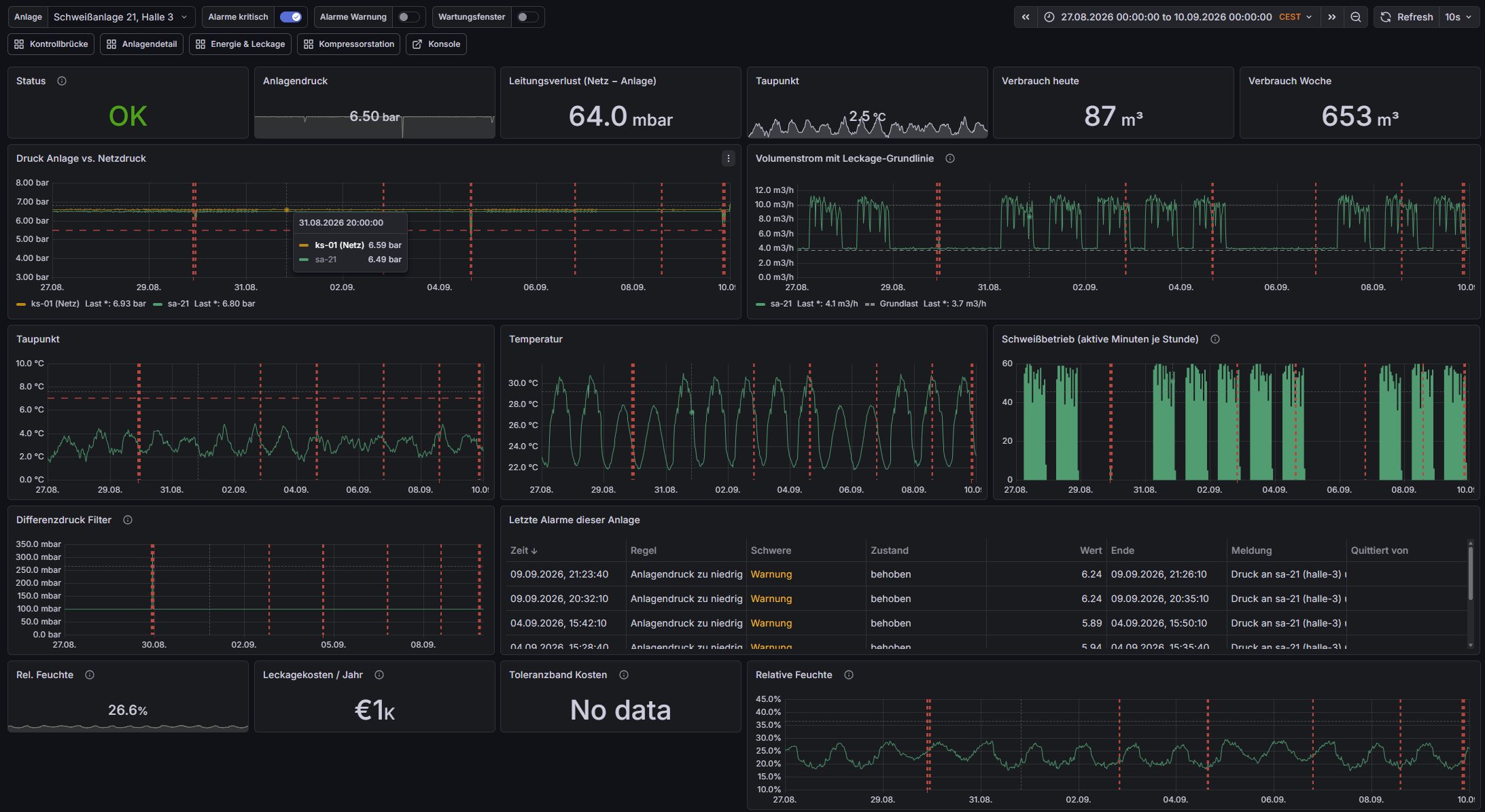
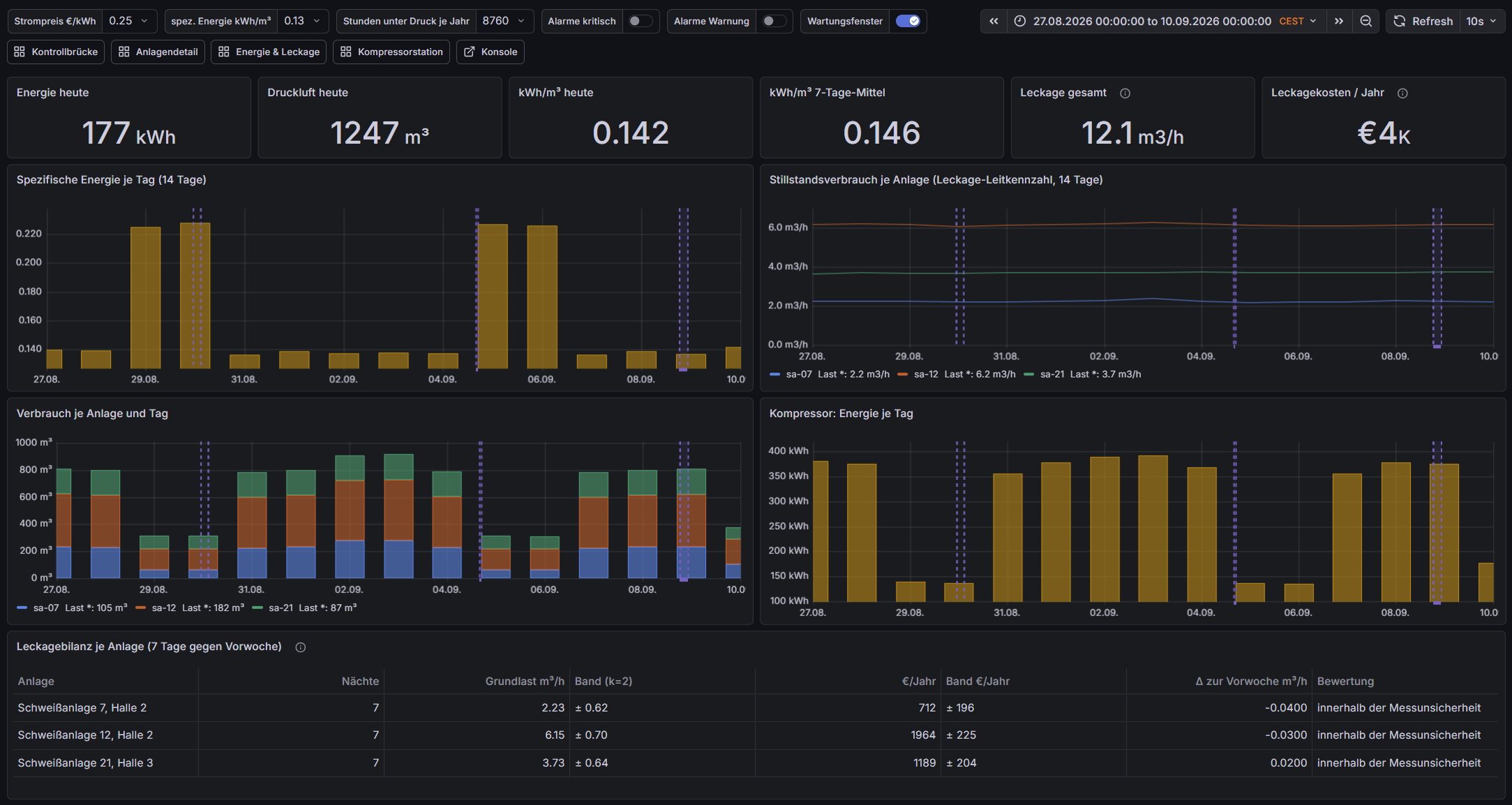
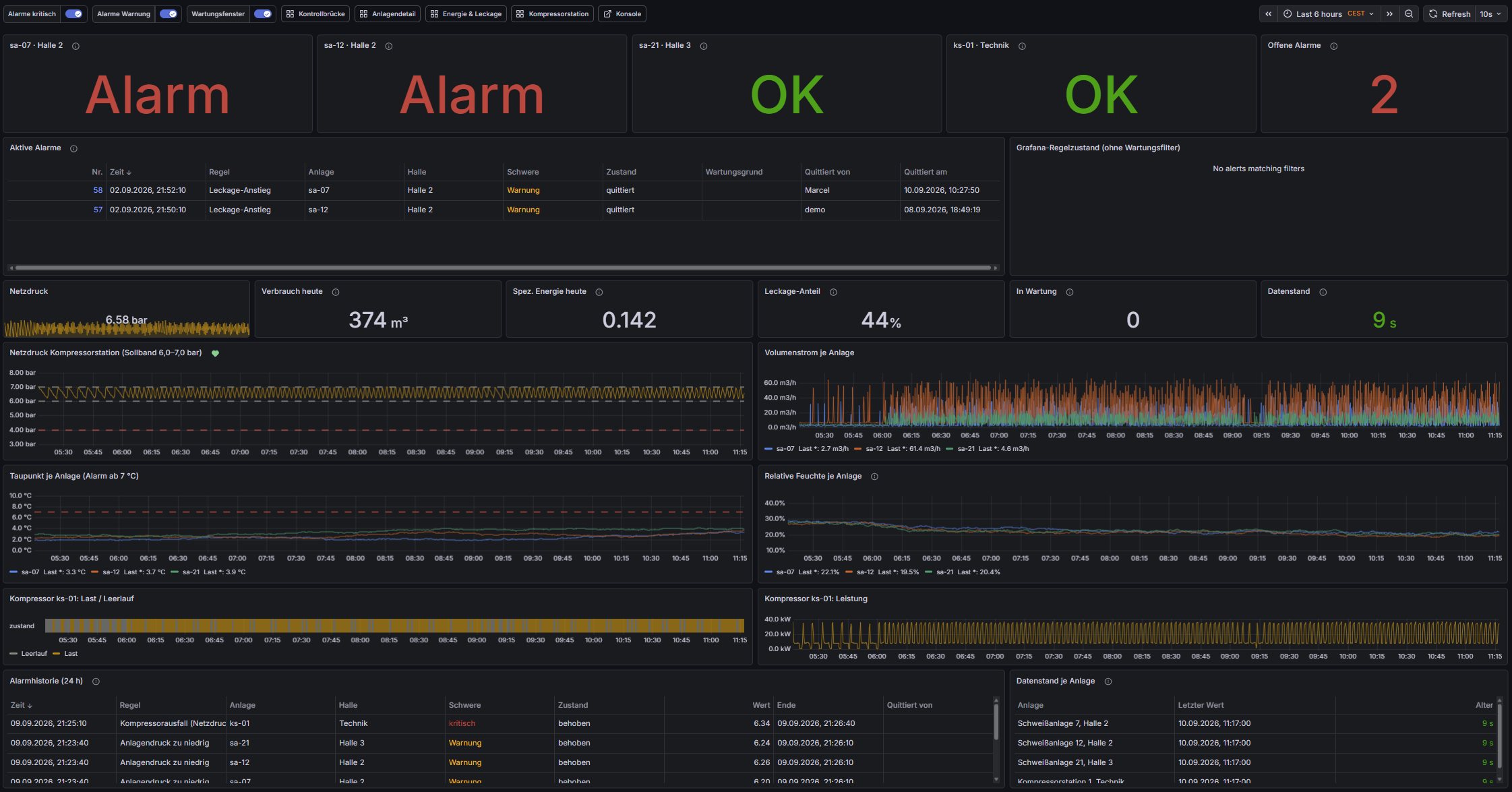
A service unit with a flow sensor captures consumption and condition data and transmits it via IO-Link — a dashboard for pressure, flow, consumption, energy, leakage and machine states.
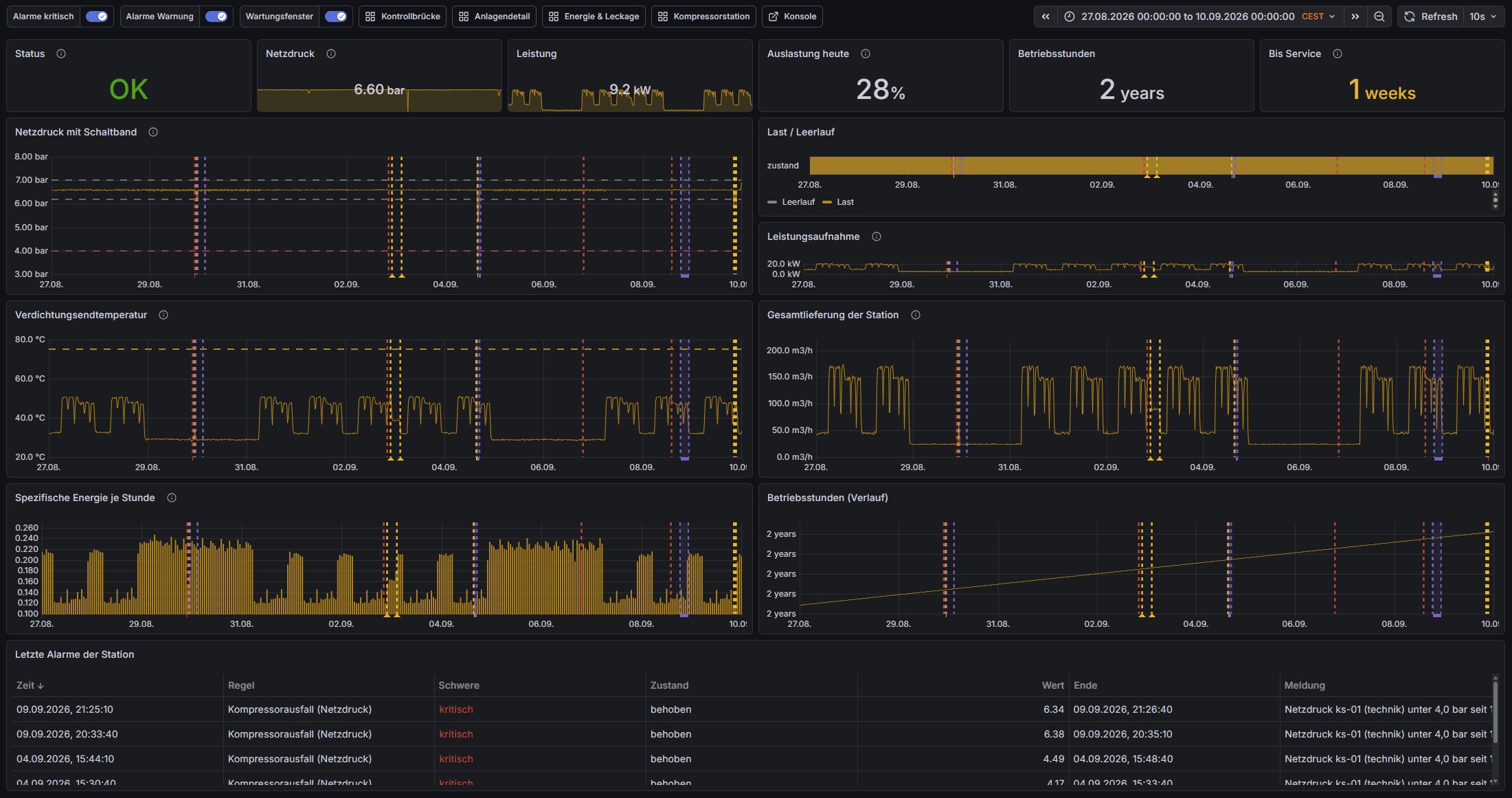
In many production plants compressed air is one of the largest drivers of energy use and cost — above all through leakage and avoidable consumption. A service unit with a flow sensor continuously captures consumption and condition data and transmits it via IO-Link for central evaluation. The dashboard visualises pressure, flow, consumption, energy demand, leakage and machine states. For sensitive manufacturing processes such as welding, temperature, relative humidity and dew point are monitored as well. An integrated alerting system detects critical deviations early and reports precisely where action is needed. Historised readings, trends and key figures provide a sound basis for audits, energy optimisation and condition-based maintenance — for fewer compressed-air losses, stable process conditions, lower operating costs and higher plant availability.
We analyse your machinery and show where condition monitoring pays off fastest.